Weather
The room in changing weather.
The living room of Above the Bay, seen from one viewpoint as the weather changes outside. The furnishings and finishes are held consistent, so the difference lies in the light and the view.
Above the Bay · Concept study
One viewpoint
Above the Bay
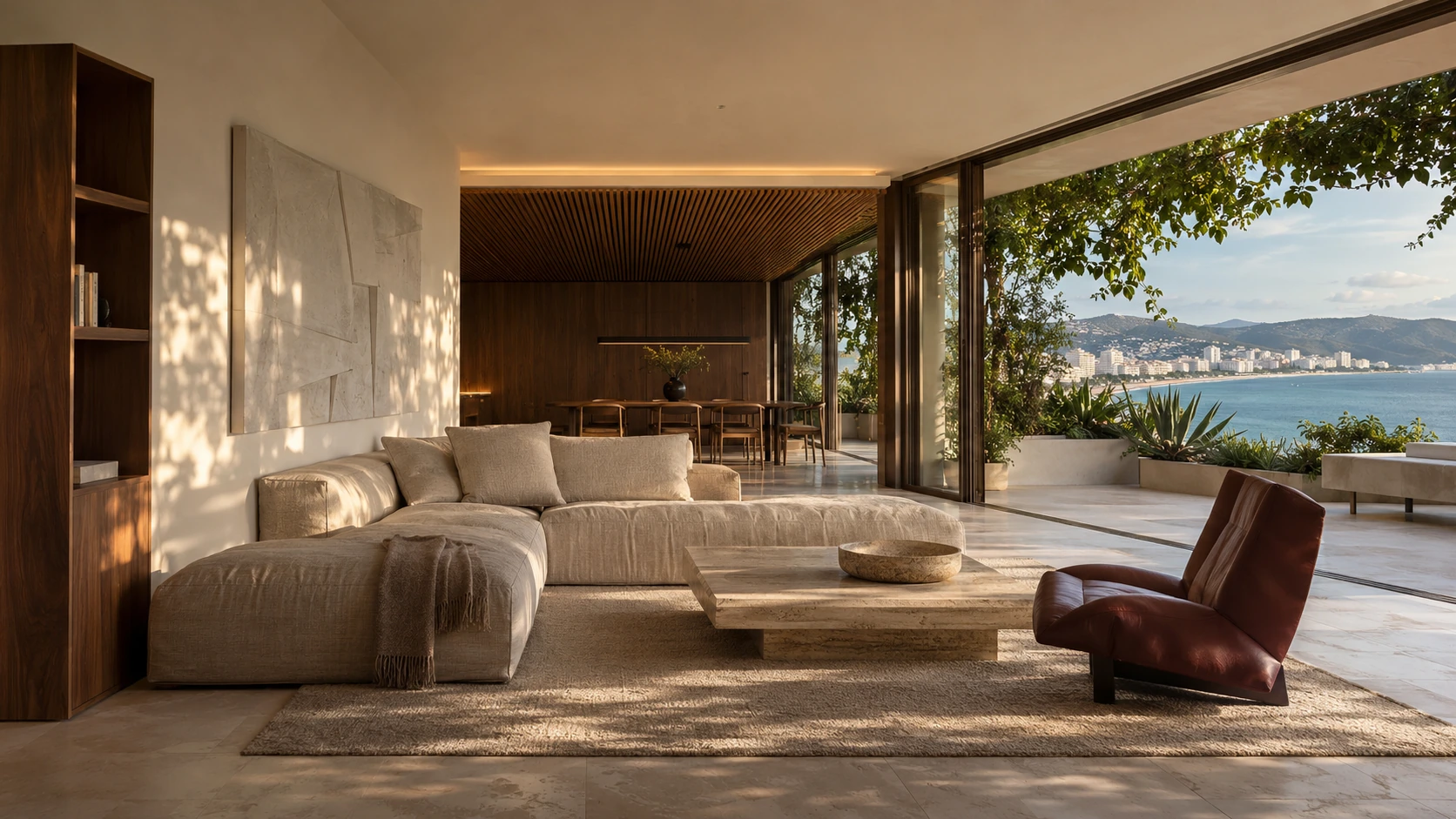
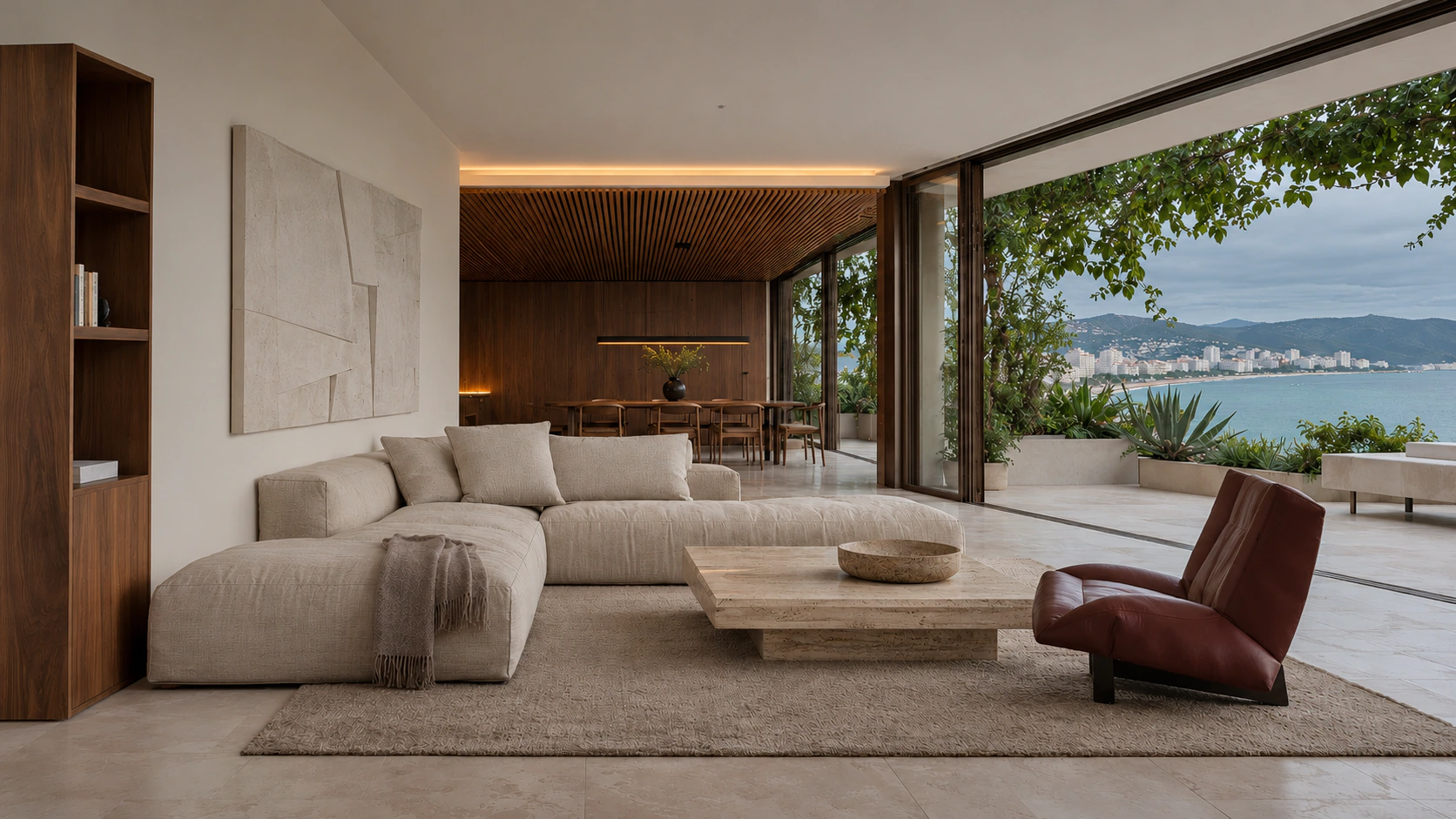
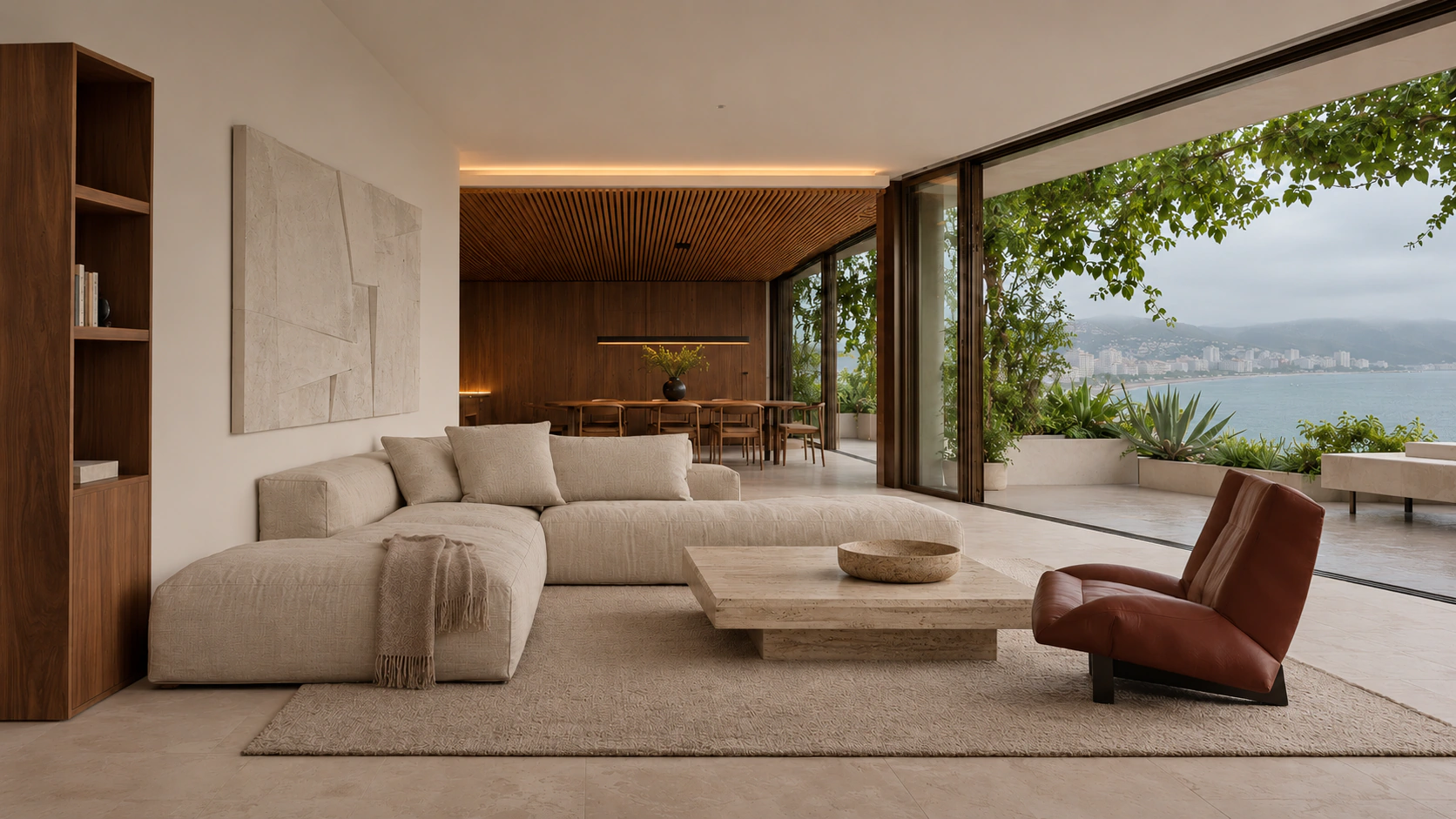
Weather views are composed for presentation and show the character of each condition; they are not a forecast or a measurement of daylight or heat.
How weather changes the light
Daylight shapes how finishes are seen. Under cloud, a timber ceiling can look cooler and a pale floor less bright. Seeing the same room in clear and overcast light helps confirm materials and colors that work in both.
For a commission, weather views are composed for the actual room, its finishes and its outlook, with the view drawn from references for the site and the camera and furnishings held consistent.
A sun study calculates where direct sun falls at a given date and hour, for the project's own location and orientation. Seasonal sun studies